Español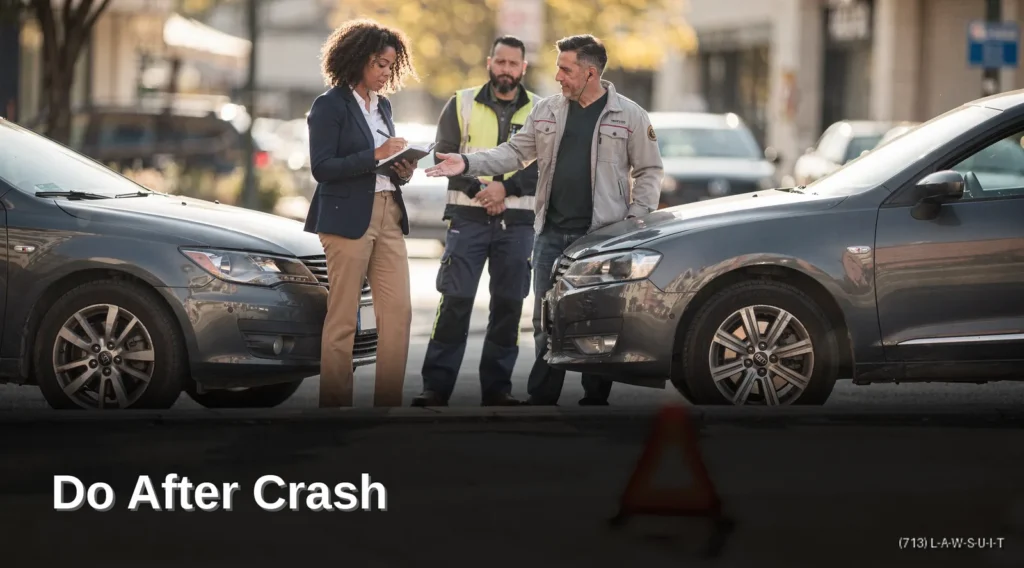
What To Do After a Car Crash
By (713) L-A-W-S-U-I-T Editorial Team · Updated 2026-08-11
Safety comes first: stop the vehicle, turn on hazard lights, and call 911 immediately to report the accident and request police and medical assistance. Exchange names, insurance details, and license plate numbers with the other driver, then photograph damage and injuries before contacting your insurance company within 24 hours.
Injuries require immediate attention: check yourself and passengers first, then move vehicles out of traffic if possible. Following the 7 essential steps—from safety checks to documentation—protects your health, strengthens insurance claims, and preserves legal rights after a collision.
Immediate priorities include checking for injuries, calling 911, and moving vehicles out of traffic when possible. Drivers exchange insurance and contact information, photograph the scene, and avoid discussing fault. Contacting (713) L-A-W-S-U-I-T afterward helps accident victims protect their rights and pursue fair compensation before speaking with insurance adjusters.
What Are the First Steps After a Crash?
Safety comes first, then documentation, then reporting to authorities. Skipping any of these steps weakens a claim before it even begins. Insurance adjusters look for gaps to justify a lower payout. A clear legal checklist protects both health and future compensation.
The proper first steps follow a specific order:
Check for injuries. Drivers should assess themselves and any passengers immediately, before addressing vehicle damage or exchanging information.
Move the vehicle if possible. A drivable car should be pulled to the shoulder or as far from traffic as safely possible, while everyone stays at the scene.
Call law enforcement. An official police report creates a documented record that insurers and attorneys rely on later.
Check for injuries. Drivers should assess themselves and any passengers immediately, before addressing vehicle damage or exchanging information.
Move the vehicle if possible. A drivable car should be pulled to the shoulder or as far from traffic as safely possible, while everyone stays at the scene.
Call law enforcement. An official police report creates a documented record that insurers and attorneys rely on later.
What should drivers do first at the scene?
Injury checks come before anything else. No property matters more than confirming that everyone involved is physically safe.
Is moving the car after a crash necessary?
Yes, when it’s still drivable. Leaving a damaged vehicle in traffic risks a second collision, so relocating it protects everyone nearby. This single action is often the most overlooked of the what to do after crash priorities.
How Do You Document the Scene and Claim?
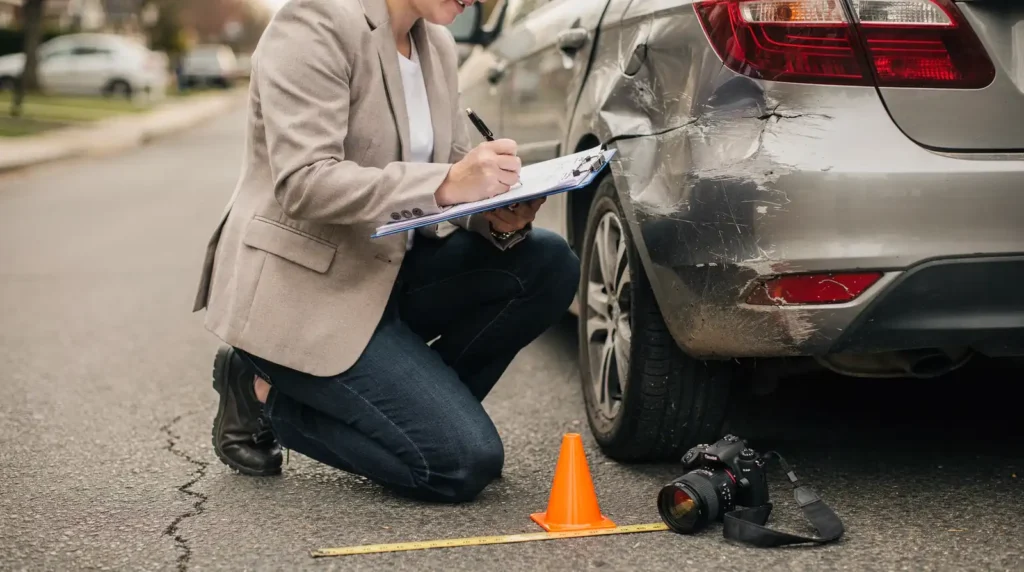
Solid documentation starts with information exchange, not photographs. Every driver, passenger, and witness at the scene should provide contact details before anyone leaves. This legal checklist protects accident victims when insurance disputes arise later.
What information should drivers collect from the other driver?
Names, phone numbers, and addresses come first. Drivers should also record the other party’s car insurance company, policy number, license plate, and driver’s license number. Missing even one detail can slow down a claim for weeks.
Why does documentation matter so much?
Insurance companies routinely fight accident claims, disputing fault and downplaying injuries whenever possible. Thorough records give accident victims leverage from day one.
As part of the first steps following a collision, drivers should:
Exchange contact and insurance information with everyone involved
Record license plate and driver’s license numbers
Note the other driver’s insurance company and policy number
Exchange contact and insurance information with everyone involved
Record license plate and driver’s license numbers
Note the other driver’s insurance company and policy number
Anyone injured in the crash holds the right to pursue compensation for the damages suffered, making early documentation a foundation for that claim.
When Should You Follow the Legal Checklist?
The moments right after a collision demand action, not delay. Drivers who wait to protect their claims often lose critical evidence and negotiating power. A legal checklist works best when followed within hours of the crash, before insurance adjusters start shaping the narrative.
Hiring an experienced attorney immediately following the crash stands as a critical [first step](https://713lawsuit.com/houston/motorcycle-accident-lawyer) in protecting any claim. Delay gives insurance companies room to minimize what a driver is owed.
Does it matter who caused the crash?
Yes. Drivers harmed by another motorist’s negligence, including distracted or texting drivers, should call the firm’s lawyers for guidance right away. The firm has secured compensation for numerous clients hurt in vehicle crashes. Refuses to settle for an unfair amount, working diligently toward maximum compensation for injuries and property damage.